Saturday, June 16, 2018
Things Recently Planted
Hydrocotyle Tripartia
Dwarf Sagittaria
Val
Blyxa japonica
Cryptocryne wendtii
Cryptocryne mioya

Tuesday, January 23, 2018
Objects of the class I can't even
This captures so much of my frustration with the "liberal" NPR and Times. It reports attacks on the FBI for being a criminal cabal but is indifferent to the accuracy of the attacks. Interestingly even by the "we want to report on what both sides are saying equally" metric it still fails, giving only one sentence on "Democrats say" and giving no time whatsoever to the idea that the attacks are without merit.
Journalists are following a set of professional guidelines that were developed in a different time. Players have learned how to game the system, in this case being well aware that the media will report what people say rather than what a thing is.
Journalists are following a set of professional guidelines that were developed in a different time. Players have learned how to game the system, in this case being well aware that the media will report what people say rather than what a thing is.
Increasing the NIH budget by 1% may not cure all diseases
The Grandiosity/Contribution Ratio
Perhaps the most interesting part of Zuckerberg's language here is that it reminds us just how much the Titans of the Valley have bought into their own bullshit.
Wednesday, December 6, 2017
Fake Discourse
This is one of those disturbingly captivating stories that make me think I'm not too cynical but too naive. It's not the litany of harassment the author endures but the story about USA Today trying to fake a debate, contacting the author to tell her what they want written:
The other thing they found out is that they don't care. That they'd rather pretend to be the adults in the room rather than act like adults.
The Editorial Board plans to publish a piece arguing that the reckoning on sexual harassment is healthy and overdue, but every case is different and the accused deserve due process. If you are interested, we would love to have you write the opposing viewIjeoma Oluo respnds
"I can’t write a rebuttal to that because of course I believe in due process [ . . . ] But I’d be happy to write a response.”
I told her that I’d be happy to write about how the fixation on “due process” for these men was an attempt to re-center the concerns of men. [ . . . ] Due process. Women would love ANY process. They would love to even be heard.This seems like a good response. There is room for debate. So they ran it? The USA Today representative again:
But what they really want is to write that they believe that it’s great that these women are coming forward but that they believe in due process, and they want you to write that you don’t. They want a piece that says that you don’t believe in due process and that if a few innocent men lose their jobs it’s worth it to protect women. Is that something you can do?USA Today ran their editorial with no "rebuttal." That's the kicker. Presumably they shopped around a bit, and found people who oppose due process rarer than they thought. That perhaps they didn't understand the "other side" after all and so certainly weren't giving it enough coverage. That's one thing they found out.
The other thing they found out is that they don't care. That they'd rather pretend to be the adults in the room rather than act like adults.
Monday, July 31, 2017
Tremontaine
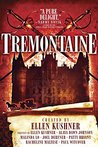 Tremontaine by Ellen Kushner
My rating: 3 of 5 stars
This is a cooperatively written, serialized prequel to the "fantasy-of-manners" Swordspoint (which in turn is followed by the heavily recommended The Privilege of the Sword). I haven't read the background but it feels like it was handed around between authors with a rough outline of where they wanted to end up, and everyone seemed to be on the same page when it comes to the spirit of the work. It's mostly solid storytelling and really has the feel of a 19th century serialization. Occasionally this doesn't work--a few chapters felt like they'd be heavily abridged in most editions, as characters seemed stuck in bland dialogue and parties while waiting for the story to pick up.
It is a pretty good story when it is going full steam. The Riverside setting is a late medieval or early renaissance world, fantasy in the sense of being ahistorical instead of magic heavy. The depiction three different cultures--the local nobles, the Riverside lower class, and a group of foreign traders--is done skillfully and the interactions feel quite natural.
The main selling point Duchess Tremontaine, much young than her appearance in Swordspoint. She's a vain, evil, manipulative and a genius, much in the mold of Francis Underwood in House of Cards. She has a few rivals with the wit to stay in the game, most notable the Balam "trader" Kaab, a young foreign merchant trained in the subterfuge-and-spying part of the family business. A young genius mathematician, kind and vulnerable and somewhere "on the spectrum" while she's working on Copernican solutions to astronomy, is a brilliant addition to the cast too.
Saturday, July 15, 2017
It's not our fault if you can't earn a living off the land rich men own
The rise of serfdom in Hungary was connected to the desire of rich people to be rich, which meant own landing and having serfs:
Stephen ordered that 'those who do not want to live under the authority of the monastery . . . shall be driven out of that place against their wish and their will.' Count Peter handed over one of his villages to the Abbey of Szazd with the condition that 'everyone who lays claim to status of freedom shall depart from there with the exception of the family (i.e., the serfs) of the church.' By the mid-11th century the kingdom was full of fugitive freemen, who posed a constant threat to public order.Pal Engel, The Realm of St. Stephen p.78
Thursday, June 1, 2017
Not understanding the math behind the rule does not make it a good rule
Treating the output of an "algorithm" as inherently more objective or insightful than an expert opinion or even a gut feeling is really not defensible, though it is often treated as such. Especially I've noticed when it confirms existing biases.
A decent if short interview plugging a paywalled article is here:
Quick additional note: Feeding in data without explicit race and gender markers does not solve the problem, since if these are powerful factors they will be inferred from other traits in the data set.
A decent if short interview plugging a paywalled article is here:
[T]ransparency is needed where technologies affect us in significant ways. Algorithms decide if individuals are legitimate candidates for mortgages, loans, or insurance; they also determine interest rates and premiums.
[. . . ]
But algorithms trained with biased data pick up and replicate these biases, and develop new ones.
[ . . . ]
If you’re hiring someone for a management position and you feed your algorithm data from the last 30 years, the data will be skewed, and the projected ideal candidate will be someone male, white, and in his 40s or 50s. I am a woman in my early 30s, so I would be filtered out immediately, even if I’m suitable for that position. And it gets even worse, because sometimes algorithms are used to display job ads, so I wouldn’t even see the position is available.
Quick additional note: Feeding in data without explicit race and gender markers does not solve the problem, since if these are powerful factors they will be inferred from other traits in the data set.
Thursday, January 26, 2017
More links to toss in the fire
Trump's draft terrorism related ban avoids banning immigration from countries he does business with. So Saudi Arabia, home to the 9/11 attackers, is not on the list.
"The Thing" was a passive Russian listening device embedded in a gift sent to the US ambassador. Since it used no power it was hard to detect--basically a proto-RFD in 1945. It apparently lasted five years, but the real evidence of Russian perfidy is that the bug violated a US patent.
L. M. Bujold interview. Best response was about reactions to her writing--I figured she'd go with being glad she made someone happy (that's what the questions seemed to be leading to) but instead:
"The Thing" was a passive Russian listening device embedded in a gift sent to the US ambassador. Since it used no power it was hard to detect--basically a proto-RFD in 1945. It apparently lasted five years, but the real evidence of Russian perfidy is that the bug violated a US patent.
L. M. Bujold interview. Best response was about reactions to her writing--I figured she'd go with being glad she made someone happy (that's what the questions seemed to be leading to) but instead:
One that continues to baffle me is the indefatigable enthusiasm of some fans for explaining to others that Barrayaran neo-feudalism is a terrible system of government, as if their fellow readers couldn’t figure that out for themselves. [ . . . ] From the passion these readers bring to the table, one would gather they imagine insidious card-carrying Feudalists are dire threat to the lifeblood of our nation.
Wednesday, January 4, 2017
Instead of Dancing in the Fire
Things Cassandra Saw That She Didn't Tell the Trojans, Because at That Point Fuck Them Anyway
Did Bad Health Care Kill the Republic? Compare and contrast with how Lois Bujold thinks about pregnancy and technology. In sci-fi. Space opera sci-fi. Military space opera sci-fi.
The Star Wars Insect Theory. Hadn't realized this was from Max Gladstone.
The Queen Does Not Rule. So Star Wars insects wouldn't be ants. Not bad, and by an actual researcher. But interesting that there's criticism of comparing ants to centralized systems back when that was the rage followed by an (un-self-aware?) insistence that they're more like trendy modern networks.
Did Bad Health Care Kill the Republic? Compare and contrast with how Lois Bujold thinks about pregnancy and technology. In sci-fi. Space opera sci-fi. Military space opera sci-fi.
The Star Wars Insect Theory. Hadn't realized this was from Max Gladstone.
Wednesday, December 14, 2016
"Upward mobility" and economic growth
I've realized in the last few years that a lot of my professional success is due to working at a growing company for so long. People needed to move into new roles, learn new things, take on more responsibility, and some of that naturally went to internal people who were in the ballpark in skill and experience. Sure, some of that happens everywhere but the rates would be very different. So while in one sense I can look back and think "work hard and get rewarded" it just wouldn't have happened in a contracting company like much of the pharmaceutical world.
This also applies nationwide--people who came of age in the '50s would have experienced, in aggregate, a lot of salary increases over the course of their career and looking at themselves and their cohort have learned that hard work is rewarded and if you're patient you should get ahead. The lower growth rates of the last few decades will leave people with a different view of how things work, even if all else were equal.
Long intro but I kind of assumed that this phenomenon--lower growth--is a big part of people not doing better than their parents. Not moving up in relative terms (ie, staying in the same quintile) is primarily a policy issue but as it turns out so is not earning more than your parents.
/cdn0.vox-cdn.com/uploads/chorus_asset/file/7638163/Screen_Shot_2016_12_13_at_11.13.13_AM.png)
From Vox.
In retrospect I should have been able to figure this out without seeing a graph, given what I believe about the impact of policy on equality over the last 60 years.
This also applies nationwide--people who came of age in the '50s would have experienced, in aggregate, a lot of salary increases over the course of their career and looking at themselves and their cohort have learned that hard work is rewarded and if you're patient you should get ahead. The lower growth rates of the last few decades will leave people with a different view of how things work, even if all else were equal.
Long intro but I kind of assumed that this phenomenon--lower growth--is a big part of people not doing better than their parents. Not moving up in relative terms (ie, staying in the same quintile) is primarily a policy issue but as it turns out so is not earning more than your parents.
From Vox.
In retrospect I should have been able to figure this out without seeing a graph, given what I believe about the impact of policy on equality over the last 60 years.
Monday, November 14, 2016
Privilege of the Sword
At some point I'll go back and just post links to my missing reviews I suppose, but this was one of the more charming books I've read and a good fit for my middlebrow views on how literature should address important topics.
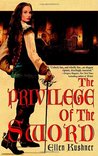 The Privilege of the Sword by Ellen Kushner
My rating: 4 of 5 stars
Lucius Perry was masked so it's a good thing I recognized his smooth dark hair, that and his sleeve, which was of an unusual cut in that glorious peacock blue. When you've mended as many clothes as I have, you sort of memorize fabrics without meaning to.
This book started seeming a little forced to me but grew into such a pleasure soon I was convinced the initial problems were all on me. This is definitely true of the ending, which initially felt unsatisfying but after sleeping on it seemed to be exactly what it should have been.
The setup has Katherine, a young woman, invited by a rich relative to come to the city. Against all conventions of civilized behavior he then dresses her in men's clothes and starts training her in swordplay. You could have ended up with an straightforward young-adult style adventure story which just plopped a girl in the hero's slot. But for a story that is rather explicitly about gender it's a testament to Kushner's craft how the points fill the background too. The mad uncle's idea is that a woman, given a sword and trained in dueling, can now decide for herself what "honor" is. This metaphorical give-a-woman-her-own-voice approach is mirrored in a book with long segments from women's point of view, neither of whom are Arya Stark like tomboys. Hence the quote--when Katherine thinks of needle, she is in fact thinking of a sewing needle and her domestic skills, and those have an unembarrassed place in this swashbuckling yarn.
I picked this up on an Audible sale with a 2-for-1 offer without knowing anything about it, except the "Neil Gaiman presents" bit on the recording. I've never been so satisfied with such a blatant marketing ploy.
View all my reviews
The Privilege of the Sword by Ellen KushnerMy rating: 4 of 5 stars
Lucius Perry was masked so it's a good thing I recognized his smooth dark hair, that and his sleeve, which was of an unusual cut in that glorious peacock blue. When you've mended as many clothes as I have, you sort of memorize fabrics without meaning to.
This book started seeming a little forced to me but grew into such a pleasure soon I was convinced the initial problems were all on me. This is definitely true of the ending, which initially felt unsatisfying but after sleeping on it seemed to be exactly what it should have been.
The setup has Katherine, a young woman, invited by a rich relative to come to the city. Against all conventions of civilized behavior he then dresses her in men's clothes and starts training her in swordplay. You could have ended up with an straightforward young-adult style adventure story which just plopped a girl in the hero's slot. But for a story that is rather explicitly about gender it's a testament to Kushner's craft how the points fill the background too. The mad uncle's idea is that a woman, given a sword and trained in dueling, can now decide for herself what "honor" is. This metaphorical give-a-woman-her-own-voice approach is mirrored in a book with long segments from women's point of view, neither of whom are Arya Stark like tomboys. Hence the quote--when Katherine thinks of needle, she is in fact thinking of a sewing needle and her domestic skills, and those have an unembarrassed place in this swashbuckling yarn.
I picked this up on an Audible sale with a 2-for-1 offer without knowing anything about it, except the "Neil Gaiman presents" bit on the recording. I've never been so satisfied with such a blatant marketing ploy.
View all my reviews
Saturday, October 8, 2016
Improbable Transition Forms
An interesting way to view life:
Boltzmann, quoted in Morton's Eating the Sun. From the quote I'm not sure if Boltzmann was really thinking of all of life's intricate processes as just complicated and improbable cascades of energy through electrons and molecules, but Morton definitely is.
There exists between the sun and the Earth a colossal difference in temperature . . . The energy of the sun may, before reaching the temperature of the Earth, assume improbable transition forms. It thus becomes possible to use the temperature drop between the sun and the Earth for performing work, as is the case with the temperature drop between steam and water.
Boltzmann, quoted in Morton's Eating the Sun. From the quote I'm not sure if Boltzmann was really thinking of all of life's intricate processes as just complicated and improbable cascades of energy through electrons and molecules, but Morton definitely is.
Wednesday, March 16, 2016
Mystères à Twin Peaks
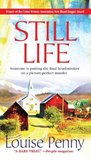 Still Life by Louise Penny
My rating: 3 of 5 stars
First in an ongoing and apparently well-loved mystery series; I kind of get the appeal but for me it was not quite what it wanted to be.
The main gimmick (at least for American me) is the small town Quebec setting. There's a murder by hunting arrow (or maybe it was an accident, but of course it wasn't an accident) and big city inspector Gamache and his team turn over stones in the town until they uncover the hidden secret that matters.
Characters, description and plot were satisfying for moderately long stretches--I didn't hate the book. I found the final resolution disappointing but my main complaint was there was too much showing and not enough telling. For example, putatively insightful characters or actions that I thought were shown in such detail as to seem empty puffery. This includes various interview tricks or bits of detection, but the low point for me was a long conversation in which an ex-psychiatrist (part of he local color) explains how she left the profession because realized that some people just don't want to change. This is such a cliche it's a lightbulb joke* but it's presented as if it were a politically incorrect secret that was extracted by a brave soul after a long career. Better at this point I think to skip the details and just remark on her warmth or cutting humor or whatever trait was imagined.
Maybe things tighten up in the later books--the errors seemed avoidable--but there will be other books for me instead of the sequels.
*"Just one, but it has to want to change."
View all my reviews
Red In Horn and Claw
 Animal Weapons: The Evolution of Battle by Douglas J. Emlen
My rating: 3 of 5 stars
Why don't all animals evolve fearsome weapons like saber tooth tigers? Why do some beetles have horns at 30% of their body weight? Why do elk grow antlers so big each year that they have to leech calcium from their bones to do so, giving themselves "seasonal osteoporis?"
This is a remarkably clear read about how much more we know that I learned in high school. It's primarily about evolution, and secondarily about the joys of biologist doing field work with dung beetles and howling monkey feces. (I kid; of course there are multiple types of fecal matter during the author's career.)
The outlier in my examples above is the tiger, whose teeth evolved for use in hunting. They came at a cost of mobility, which was acceptable because the tiger became an ambush predator, jumping on larger animals and chomping down. Put the teeth on a lynx or a house cat named Timmy and their hunting skills would plummet. That trade off makes massive weapons rare--thousands of species have them, but it's a relative drop in the bucket of life.
Most animals evolve massive weapons for intraspecies fighting. If you are fighting something with a big horn, it makes sense for yours to be just a little bigger--and the next generation the logic still holds. Once the arms race starts it becomes self-perpetuating, even if the cost is high in resource needs and mobility. Sometimes fights are mostly posturing (which is what I believed was the default starting the book)--fiddler crabs wave their claws and the smaller one backs down. Other times though it's brutal, as elks and deer seem to fight literally round the clock, wearing themselves our, during mating season.
Which raises the question of why fight in the first place? That high school answer was "over females"** and it's correct, but the book covers more specific requirements such as a gender imbalance in breeding-ready animals and geographical restrictions on resources that make defending controlling them worthwhile.
Reading about many of the examples leads to the thought that males really should have something better to do. Think about the way non-breeding ant drones work for the success of their kin; this is the opposite, a species wasting massive resources and energy fighting itself almost entirely for individual benefit. It sounds like some beetles have females digging tunnels, carrying in tastydung, and laying the eggs while the males just fight each other to control the tunnel entrance; this can't be a net positive. But it makes evolutionary in certain situations, at least for a while.
There are asides into human battle, which I admit was part of the gimmick that got me to buy the book but I found almost uniformly lacking in insightful or interesting comments. The author is a biologist, not a historian. Fortunately these sections are quite brief.
*Well, figuratively, but I like the image of male elk staking out mating territory around clocks.
**Or in rare cases, such as the jacana bird, over the males.
View all my reviews
Sunday, November 15, 2015
Terrier
 Terrier by Tamora Pierce
My rating: 3 of 5 stars
Nominally this is a young adult book and I gave it a shot as an audiobook, based on praise for the author various places. I'd probably have enjoyed this more in print. I'm not always sure what "young adult" means with genre fiction of the mind-candy variety. Sure, the protagonist was a 16 year old and there wasn't explicit sex. But there was certainly some gruesome violence in this story of a young guardswoman serving her apprenticeship in the slums, and dealing with poverty, domestic abuse, broken homes, child killers and some miners in bad need of union representation.
Liked it but didn't love it; certainly I get why people recommended Pierce.
Zeus is Dead
 Zeus Is Dead: A Monstrously Inconvenient Adventure by Michael G. Munz
My rating: 3 of 5 stars
About as much fun as you'd hope for from the title, which is to say quite a bit.
The Greek gods withdrew under edict from Zeus; they meddled in the world but only behind the scenes. After Zeus' murder they're back in all their vanity and pettiness, expecting worship. They don't get power from being worshipped, mind you--they just like it.
The muse Thalia (who has picked up science fiction as well as comedy) joins two mortals to try and solve the mystery and provides running commentary. Even sillier and more farcical than someone like Christopher Moore, Munz tosses in a joke whenever he can. Some of the fourth-wall breaking stuff gets tiresome, especially a tendency to write a sentence and then comment on its grammatical weakness in the next one. On the other hand, a few got audible snorts of amusement and the plot was at least 80% satisfying, so pretty happy taking a chance on this one.
View all my reviews
The Emerald Planet
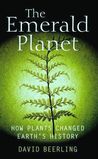 The Emerald Planet: How Plants Changed Earth's History by David Beerling
My rating: 3 of 5 stars
This is something in between a history of plants on Earth, and a set of essays on that theme. It does start with the development of leaves, and then moves on to the plants' creation of massively high oxygen levels in the Carboniferous (the era of dragonflies with 5' wings) so the first two chapters felt like it would be a tour of plant evolution.
This is probably far too broad a topic, and in any event is not what we get. Nothing about the evolution of flowers or the period worldwide redwood forests, for example. Instead the themes are not merely what was important to plants, but when plants were important to the climate, or even our understanding, through fossils, of the climate. This is a fascinating picture of a dynamic planet, constantly changing in response to a dance between geological processes and plants, which respond and then change the atmosphere and soil in turn.
The chapters cover the science with some technical detail, but also the history of the science, and in some cases the quirks of the scientists. The implications of these sorts of changes to modern day climate change is mentioned more than once, but happily the science is treated as interesting on its own terms, rather than a tool for the present. Some of the research referenced seems cutting edge, which is actually both a complement and a concern--I'd expect at least one or two of the stories to change as we learn more about the distant past. (Not a knock on Beerling, who is quite up front about uncertainties.) My only other nitpick is my ebook was missing the full color plates.
For my own reference the chapters are below--spoilerized, although the stories are tens of millions of years old, it's probably better to just read the book.
Three Men in a Boat
 Three Men in a Boat by Jerome K. Jerome
My rating: 4 of 5 stars
This review is written a year after I listened to the audiobook, so details are scant, but this was one of the best audio choices I made.
A more-or-less totally fake memoir of Thames boat trip by three upper class twits in the late 19th century. Life on the Mississippi for the Eton crowd, as it were.
"Jerome K. Jerome" (the character) is a bit like Bertie Wooster, self-absorbed, pampered and clueless. He does, however, have a knack for narrating hilarious scenes of embarrassment and self-inflicted pain. He generally lacks Bertie's good nature or touching loyalty to his friends, which is actually good since he is so often the victim of his own shallowness that I was glad it wasn't happening to a nicer guy. There are some wry observations and wisdom but mostly just a series of very funny sketches.
Saturday, October 3, 2015
Redshirts
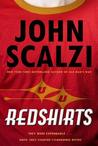 Redshirts by John Scalzi
My rating: 3 of 5 stars
Scalzi has some fun imagining a starship like the Enterprise from the redshirt's perspective, as they try to dodge away missions, figure out why the entire bridge crew beams down for no apparent reason, and try to understand why no one has noticed the captain of the fleet's flagship has the highest casualty rate in history.
The first third is all Galaxy Quest style jokes, and is pretty awesome. Then Scalzi seems to decide (probably correctly) that he couldn't keep that up for the whole book and develops both a plot and a theme. The end result is OK but part of me wishes it had been done by someone who embraced the farce the whole way through.
View all my reviews
Thursday, September 3, 2015
CryoBurn! by Lois McMasters Bujold!
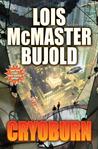 CryoBurn by Lois McMaster Bujold
My rating: 4 of 5 stars
The exclamation points in my post title are not strictly required--the official book title has no punctuation and unlike David Malki !, Bujold does not appear to have attached an explanation to herself as a formal honorific. But I wanted to express some of the considerable satisfaction this book left me with even before I got to the meat of the review.
I thought "cryoburn" might mean Miles was battling the health effects of his death some books back, but for the first book in a while he's offworld, in full Imperial Auditor mode, at the height of his powers--which is to say the book starts with him wandering through pitch black catacombs, drugged and hallucinating, on a planet where he has no legal authority and has to rely on some possibly corrupt consulate officials as backup. Against him is the corporate elite and social system of an entire planet, so it's not what you'd call a very challenging case.
The planet itself is a world where more people are in cryosleep than alive, awaiting cures from disease and old age to be discovered and/or centuries of compound interest to accumulate before awaking so they will all pop up and live as an immortal leisure class. The planet is remarkably similar to Clifford Simak's Why Call Them Back From Heaven, though since Miles is an offworlder it only takes a few pages for him to realize everything is bonkers and resolving the mystery doesn't shake his core beliefs or anything.
Above average entry in the series. And if for some reason you only want to read one book about a world full of corpsicles this one, not Simak's, is the one to pick.
Subscribe to:
Posts (Atom)