Pages

Wednesday, July 16, 2014

Curse of the Mistwraith

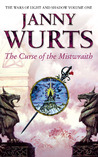
The Curse of the Mistwraith (Wars of Light & Shadow, #1; Arc 1, #1)The Curse of the Mistwraith by Janny Wurts
My rating: 3 of 5 stars

There are some nice moments in this book, the first of lord-knows-how-many in a series, and maybe I'd even recommend it if it told a complete story. And was maybe half as long. But in too many ways it just comes off as a standard fantasy setup with prophecies and wizards and destinies. Maybe the later books will deliver a great payoff but I'm unlikely ever to find out.

View all my reviews

Tuesday, July 15, 2014

The Attempted Murder of Thurgood Marshall

In late 1946, Thurgood Marshall was an attorney for the NAACP Legal Defense Fund and finishing the last of an amazing series of trials in Tennessee.  Following race riots in Columbia, in a pre-civil rights court room and with all white juries, Marshall would still win acquittals for 22 black men charged in the aftermath.

The last trial ended in November, with the spectator area atypically empty.  After another acquittal, Marshal and his associates left quickly and quietly, only to be stopped by the police on the way out of town.  Marshall's associates--Looby, Raymond and a white attorney named Weaver--were told to leave town but Marshall was arrested for drunk driving.

The police turned down a dirt road.  "Marshall knew that nothing good ever happened when police cars drove black men down unpaved roads."  But Looby had followed the police instead of leaving town and managed to intercept the police sedan near Duck River; he stopped the car and refused to move.  Frustrated, the police turned around and tried to book Marshall on drunk driving charges.  A judge name Jim Pogue took a look at Marshall, decided it was BS, the smelled his breath and let him go.  Pogue "stated that those offiers had come to the wrong man if they watned to frame Marshall. He said he was the one magistrate in Columbia who had refused to sign warrants for the arrests of Negroes during the February trouble."

By this point Marshall had realized why the courtroom was empty earlier in the day; the usual spectators were unwilling to take another defeat and had instead gathered at Duck River ahead of time for the planned lynching.  This time Marshall and the other attorneys left town secretly, sending another driver in Looby's car as a decoy.  Marshall made it out by the decoy car was in fact stopped and the driver beaten.

Source for this account: Devil in the Grove by Gilbert King.
Alternate version, not contradicting anything above but omitting the dirt road detour and the beating of the decoy driver, is here: http://tennesseeencyclopedia.net/entry.php?rec=296

Monday, June 9, 2014

Saturn's Children

Saturn's ChildrenSaturn's Children by Charles Stross

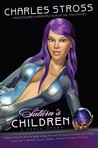
I bounced this up on my to read list because I was in the mood for space opera and someone mentioned it as a modern homage to Heinlein. Which is pretty spot-on, although we're not talking Starship Troopers, Farnham's Freehold or his young adult stuff. This is later-years Heinlein with plenty of sex in plenty of ways. (That picture to the left Goodreads provided gratis gives you a realistic idea of what era they're paying homage to.)  It's a picaresque novel in space, decently plotted even if there were so many betrayals, body swaps and identical model robots that by the end I'd lost the thread on a few of the factions.

By far the most interest part is the setting, which is what I was most skeptical of going in. Stross imagines a world were humans have succumbed to something or other, leaving sentient robots behind. And while a few are quiet alien, they were generally built to think "like humans" and/or have internalized their original design goals that they keep on functioning in some facsimile of human society. But they weren't built just to be intelligent--they were also built to be servants, and the book tackles the implications of that in various ways.

Uncle Fred in the Springtime

Uncle Fred in the SpringtimeUncle Fred in the Springtime by P.G. Wodehouse
My rating: 3 of 5 stars

Time was I read a lot of PG Wodehouse, in the pre-web days where series that were oversupplied in used bookstore had a special place in my heart. I eventually had to stop because while I loved them I couldn't remember if I'd read Carry On, Jeeves but not Right Ho, Jeeves. And since all the plots involved Bertie starting himself accidentally engaged while trying to help out a friend and ended with him giving up on his desire to wear a green tie or white pants over the objections of Jeeves, I simply ran out of options. (A friend implied you could remember which book it was based on which piece of clothing Bertie sacrificed at the end. If there's not already an app for that, there should be.)

After twenty-five years later it seemed OK to start reading again, since the plots are interchangeable anyway and I certainly don't remember the jokes anymore. This book is from the Blandings series so a different cast of characters. Uncle Fred is an interesting sort--he's a sixty year old Earl with the recklessness, overconfidence and generosity of Wooster with something approaching the intelligence and savoir-faire of Jeeves. The rest are 20-somethings who got a little confusing, since it's too easy to think of Fred as everyone's uncle the romantic triangles get a little weird.

I'll make one slightly serious point: In my twenties the 'old ball and chain' stereotype of all women over 50 must have passed by unnoticed, but it got old this time around. One of those annoying period jokes that just didn't age well, especially when the nominally good-hearted hero indulges in quips that come off a bit mean-spirited today. The book could have used an Aunt Dahlia.

Stats for the PG Wodehouse app I mentioned:

Plot Keyword: Pignapping,
Number of brain specialists: 2
Number of non-impostor brain specialists: 1
Primary card game: Persian monarchs
Best phobia: Fear of lambs
Destroyed clothing: None. This is a Blanding book, not a Jeeves book. Do pay attention.
Worth Reading: Yes
Tuesday, May 27, 2014

How to Draw the Tick!

This about sums up every attempt I ever made at drawing as a kid:


via John Holbo @ Crooked Timber.

Piketty Criticisms I: Bad Data

I'm reading Piketty's book fairly slowly, with a bunch of others in between.  Review eventually.

But a lot of debate is piling up as people take shots at it and defend it for whatever reason*.  So thought it worthwhile to collect for later reference, even if much appears over my head.

First, a (paywalled so I can't read) Financial Times article seems to take aim at the data.  And while I'm not going to try to venture an opinion on most of these discussions this one seems to be a bit of hatchet job, with over broad claims of massive errors while focusing on numbers which are not (or not clearly) wrong without bothering to assess their impact on the overall thesis even if they are correct.  The general claim is that Piketty's number don't support the claim that inequality has increased.

Lefty anti-capitalist article from Bloomberg has the most news-like take down, quoting experts to rebut the claim in non-opinion format.  Krugman and others cover the obvious point that the increase in inequality--especially in the US--has been established by multiple data sources so picking on a single series isn't exactly withering.  Slate's Moneybox covers the dispute in a few posts today.  Yglesias has charts, showing both the irrelevant nitpicking in France and the potentially interesting debate about UK numbers.

Wealth-inequality-in-france


Raw-uk-wealth-inequality-1810-to-2010

The red are the FT numbers and the blue is the Piketty line.  They don't seem huge shifts in either case at this scale.  Though to be clear the FT numbers for the UK show no upwards trend in any series so there is a question of how Piketty has deduced there is one.


*"For whatever reason" of course includes but is not limited to criticism motivated by finding substantial errors.  It's clear the political argument and trendiness of the work gives people a big incentive to find problems with it or point out that their observations made earlier are more insightful.  As Henry Farrell at CT points out, many who "might have found the book interesting had it been an academic exercise" respond differently when there are higher real world stakes involved--which doesn't mean they are wrong, of course.

Sooner or later I need to write my 'Science Haters' Guide to Science Criticism' and include this ploy as one of the key moves.

Tuesday, May 13, 2014

Everybody Dies Alone

From Barcelona:
Fred: I remembered this razor ad on TV showing the hair follicles, like this.  The first of the twin blades cuts them here.  Then the hair snaps back and the second blade cuts them here...for a closer, cleaner shave. That we know.  But what struck me was: If the hair follicles are going in this direction and the razor is too...then they're shaving in the direction of the beard, not against it.   
So I've shaved the wrong way all my life. Maybe I misremembered the ad.  The point is...I could've shaved the wrong way all my life and never have known it.  Then I could have taught my son to shave the wrong way, too. 
Montserrat: You have a son? 
Fred: No.  But I might someday.  Then, maybe, I'll teach him to shave the wrong way. 
Montserrat:  I think maybe my English is not so good.