Pages

Saturday, October 3, 2015

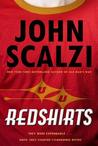
Redshirts

RedshirtsRedshirts by John Scalzi
My rating: 3 of 5 stars

Scalzi has some fun imagining a starship like the Enterprise from the redshirt's perspective, as they try to dodge away missions, figure out why the entire bridge crew beams down for no apparent reason, and try to understand why no one has noticed the captain of the fleet's flagship has the highest casualty rate in history.

The first third is all Galaxy Quest style jokes, and is pretty awesome. Then Scalzi seems to decide (probably correctly) that he couldn't keep that up for the whole book and develops both a plot and a theme. The end result is OK but part of me wishes it had been done by someone who embraced the farce the whole way through.

View all my reviews

Thursday, September 3, 2015

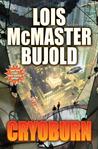
CryoBurn! by Lois McMasters Bujold!

CryoBurn (Vorkosigan Saga, #14)CryoBurn by Lois McMaster Bujold
My rating: 4 of 5 stars

The exclamation points in my post title are not strictly required--the official book title has no punctuation and unlike David Malki !, Bujold does not appear to have attached an explanation to herself as a formal honorific.  But I wanted to express some of the considerable satisfaction this book left me with even before I got to the meat of the review.

I thought "cryoburn" might mean Miles was battling the health effects of his death some books back, but for the first book in a while he's offworld, in full Imperial Auditor mode, at the height of his powers--which is to say the book starts with him wandering through pitch black catacombs, drugged and hallucinating, on a planet where he has no legal authority and has to rely on some possibly corrupt consulate officials as backup. Against him is the corporate elite and social system of an entire planet, so it's not what you'd call a very challenging case.

The planet itself is a world where more people are in cryosleep than alive, awaiting cures from disease and old age to be discovered and/or centuries of compound interest to accumulate before awaking so they will all pop up and live as an immortal leisure class. The planet is remarkably similar to Clifford Simak's Why Call Them Back From Heaven, though since Miles is an offworlder it only takes a few pages for him to realize everything is bonkers and resolving the mystery doesn't shake his core beliefs or anything.

Above average entry in the series. And if for some reason you only want to read one book about a world full of corpsicles this one, not Simak's, is the one to pick.

Wednesday, September 2, 2015

The Spy Who Came In From the Cold

The Spy Who Came In from the ColdThe Spy Who Came In from the Cold by John le Carré
My rating: 3 of 5 stars

This is Le Carre's first successful novel but not one I've read before. It does seem like a general (and very well executed) template for his later ones. Which is to say the characters live in an isolated world or deceit and artifice and the tiniest bits of true connection with another human become inordinately valuable because of their rarity. And then get used to torture the characters who foolishly indulged in them and gut-punch the reader.


The Sandman (Gaiman, not Hoffman)

The Sandman, Vol. 1: Preludes and Nocturnes (The Sandman, #1)The Sandman, Vol. 1: Preludes and Nocturnes by Neil Gaiman
My rating: 3 of 5 stars

By finishing this book I've doubled my total intake of graphic novels, and I'll probably double it again this year since I was given the next two volumes as well. And then stop, because I'm still not really in my comfort zone with them.

But I did truly enjoy this one. Gaiman is very good at getting the idea of a character or mood across in a few words, so the little sketches of people and their dreams--vanishing from them or overwhelming them--pack a good impact.

The Box

The Box: How the Shipping Container Made the World Smaller and the World Economy BiggerThe Box: How the Shipping Container Made the World Smaller and the World Economy Bigger by Marc Levinson
My rating: 4 of 5 stars

The Box is perhaps best visualized in cinematic terms. Before The Box, your scenes on the docks had burly longshoremen loading boxes and using forklifts, bars and brawls, Irish or Italian union bosses and outsiders took a streetwise guide to find what they wanted. After The Box, it's stacks of truck-sized containers, a computer printout to find the location of the one with smuggled goods, and a shoot out in a deserted maze of metal. This is the story of how one cliche became the other one.

Up until 1955 maritime shipping was run by nautical men. "Breakbulk" cargo--stacked in ships cargo holds in whatever containers or pallets it came on--was loaded and unloaded at each port manually, moved onto the next truck or train to get to its destination. This work was hard, slow and expensive. Half the cost and often more than half the time of shipping an item across an ocean was spent with your cargo not actually moving more than a few hundred yards along the dock.

Malcolm McClean was a trucker by background with no romantic connection to the sea. For him, cargo at sea might as well have been on a highway or moving over a bridge, and in 1956 he started treating cargo precisely that way--truck sized containers went on in one port, off in another, and sped on truck or train to their final destination. This is highly simplified--it took a decade to really standardize on technology, business and labor changes, and another decade for customers to start taking advantage of the costs--but ultimately those loading costs dropped to nothing.

The changes this wrought were huge. Most directly, the geography of the world's ports changed. San Francisco and other venerable cities have piers but no shipping because they were obsoleted by the container--the cranes in Oakland, Seattle and Long Beach are what you need today. Factories no longer need to be next to the waterfront, or even on the same continent. The whole ability to run international supply chains depends on the cheap and predictable transport that means a factory in Tennessee can count on suppliers in Korea.

There are of course amazing benefits to this and costs as well. You probably could read this as an unbridled success story of capitalist efficiency but I was a bit more ambivalent. The early chapters deal with the longshoremens' unions, which use to define port communities but employment dwindled to almost nothing with automation. Amazingly enough, they were able to negotiate a cut of the profits from this automation as it was phased in. Others would leave without much to show, from maritime companies and ports that couldn't keep up with the new capital investments (or guessed wrong on how to invest) to the workers and industries who could now be outsourced.

Monday, August 31, 2015

Metatropolis

METAtropolis: The Dawn of UncivilizationMETAtropolis: The Dawn of Uncivilization by John Scalzi
My rating: 3 of 5 stars

This is a collection of five long short stories nominally themed around new cities, but I'd put more emphasis on the "Dawn of Uncivilization" subtitle than the main theme. For various not-quite-specified reasons--but clearly including massive environmental stresses--the state is no longer powerful, western civilization doesn't work, and people huddle in megacities trying to get by one way or another.

The first story by Jay Lake I basically didn't understand the point of--presumably out of boredom and lack of attention as it rambled on. Maybe there is something of value there but I put the collection down for a year after that one. Everything else was good. Scalzi's is sweet and almost young adult in tone. The other three could almost be Snow Crash or Diamond Age Neal Stephenson in setting and plot. Buckell & Bear's entries follow capable loaners on the fringes of a society that is almost all fringes. The last story, by Schroeder, throws in virtual reality and is probably the most imaginative. I'm glad I didn't give up on the collection forever--the later stories are good enough that I'll probably seek out other things by Buckell and Schroeder, who I was not previously familiar with.

Wednesday, August 12, 2015

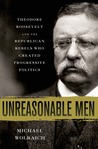
Unreasonable Men

Unreasonable Men: Theodore Roosevelt and the Republican Rebels Who Created Progressive PoliticsUnreasonable Men: Theodore Roosevelt and the Republican Rebels Who Created Progressive Politics by Michael Wolraich
My rating: 3 of 5 stars

This is essentially a history of progressives and conservatives in conflict from 1904 to 1912. It is framed in a popular style--each section opens with a narrative vignette before it gets to policy disputes. And mixed in with the policy is a whole lot about personalities.

And the personalities are gigantic. The "B-team" are progressives like Beveridge and Dolliver, journalists like Lincoln Steffens, and leaders of the conservative wing like Aldrich and Cannon get a fair share of time. But the big three are Taft, Roosevelt and La Follette.

Roosevelt is interesting, and in this account not necessarily in the way he thought he was. He was a man who talked loudly about "speaking softly" and his big stick was more for show than swinging. As president he would use the bully pulpit in style but settle for a compromise--often effective, sometimes tepid. But behind the scenes he was not a politician and loathed people who fought harder than he did.

La Follette was one of them. His strategy when faced with an obstacle seemed to be to run into as fast as he could, and when he bounced off it to assume it was probably weakened and try again. Because he embodied the spirit of the time, though, he was surprisingly effective. He railed against the rich and corrupt, the backroom deals, the political machines. In the pre-internet age he would literally read shipping rate schedules in his speeches to let people know how they were being treated by railroads. He would go to rallies for Republicans in Wisconsin and his hosts would sneak out the back as he got the crowd outraged about their votes on bills.

If La Follette was a man of the time, Taft was the one left behind. A loyal functionary who thought the way to get ahead was to do deals with "responsible" leaders like Aldrich and Cannon, he leaned on them even as La Follette and his allies finally succeeded in breaking their power. Taft is sincere and humane, conservative in temperament more than in policy. But because he had no power base except the conservatives it didn't matter. He failed to accomplish much but what he tried alienated the reformers completely.

The presidential election of 1912 saw an end to this era. Roosevelt, smarting from the personal affronts as much as the political, decided he was a radical progressive as well and opposed Taft for the presidency; La Follette made on of his few bad mis-steps, melting down in frustration as he was shunted aside by the re-invented Roosevelt. Woodrow Wilson won the election and the progressive era of the Republicans basically ended.

A good book all around. Doubly recommended for anyone in a mood to take a break from current politics and read and see the moneyed interests actually lose a few rounds.