Pages

Sunday, November 15, 2015

Zeus is Dead

Zeus Is Dead: A Monstrously Inconvenient AdventureZeus Is Dead: A Monstrously Inconvenient Adventure by Michael G. Munz
My rating: 3 of 5 stars

About as much fun as you'd hope for from the title, which is to say quite a bit.

The Greek gods withdrew under edict from Zeus; they meddled in the world but only behind the scenes. After Zeus' murder they're back in all their vanity and pettiness, expecting worship. They don't get power from being worshipped, mind you--they just like it.

The muse Thalia (who has picked up science fiction as well as comedy) joins two mortals to try and solve the mystery and provides running commentary. Even sillier and more farcical than someone like Christopher Moore, Munz tosses in a joke whenever he can. Some of the fourth-wall breaking stuff gets tiresome, especially a tendency to write a sentence and then comment on its grammatical weakness in the next one. On the other hand, a few got audible snorts of amusement and the plot was at least 80% satisfying, so pretty happy taking a chance on this one.

View all my reviews

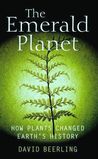
The Emerald Planet

The Emerald Planet: How Plants Changed Earth's HistoryThe Emerald Planet: How Plants Changed Earth's History by David Beerling
My rating: 3 of 5 stars

This is something in between a history of plants on Earth, and a set of essays on that theme. It does start with the development of leaves, and then moves on to the plants' creation of massively high oxygen levels in the Carboniferous (the era of dragonflies with 5' wings) so the first two chapters felt like it would be a tour of plant evolution.

This is probably far too broad a topic, and in any event is not what we get. Nothing about the evolution of flowers or the period worldwide redwood forests, for example. Instead the themes are not merely what was important to plants, but when plants were important to the climate, or even our understanding, through fossils, of the climate. This is a fascinating picture of a dynamic planet, constantly changing in response to a dance between geological processes and plants, which respond and then change the atmosphere and soil in turn.

The chapters cover the science with some technical detail, but also the history of the science, and in some cases the quirks of the scientists. The implications of these sorts of changes to modern day climate change is mentioned more than once, but happily the science is treated as interesting on its own terms, rather than a tool for the present. Some of the research referenced seems cutting edge, which is actually both a complement and a concern--I'd expect at least one or two of the stories to change as we learn more about the distant past. (Not a knock on Beerling, who is quite up front about uncertainties.) My only other nitpick is my ebook was missing the full color plates.

For my own reference the chapters are below--spoilerized, although the stories are tens of millions of years old, it's probably better to just read the book.


Three Men in a Boat

Three Men in a BoatThree Men in a Boat by Jerome K. Jerome
My rating: 4 of 5 stars

This review is written a year after I listened to the audiobook, so details are scant, but this was one of the best audio choices I made.

A more-or-less totally fake memoir of Thames boat trip by three upper class twits in the late 19th century. Life on the Mississippi for the Eton crowd, as it were.

"Jerome K. Jerome" (the character) is a bit like Bertie Wooster, self-absorbed, pampered and clueless. He does, however, have a knack for narrating hilarious scenes of embarrassment and self-inflicted pain. He generally lacks Bertie's good nature or touching loyalty to his friends, which is actually good since he is so often the victim of his own shallowness that I was glad it wasn't happening to a nicer guy. There are some wry observations and wisdom but mostly just a series of very funny sketches.

Saturday, October 3, 2015

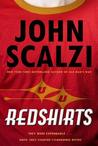
Redshirts

RedshirtsRedshirts by John Scalzi
My rating: 3 of 5 stars

Scalzi has some fun imagining a starship like the Enterprise from the redshirt's perspective, as they try to dodge away missions, figure out why the entire bridge crew beams down for no apparent reason, and try to understand why no one has noticed the captain of the fleet's flagship has the highest casualty rate in history.

The first third is all Galaxy Quest style jokes, and is pretty awesome. Then Scalzi seems to decide (probably correctly) that he couldn't keep that up for the whole book and develops both a plot and a theme. The end result is OK but part of me wishes it had been done by someone who embraced the farce the whole way through.

View all my reviews

Thursday, September 3, 2015

CryoBurn! by Lois McMasters Bujold!

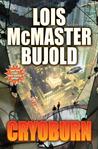
CryoBurn (Vorkosigan Saga, #14)CryoBurn by Lois McMaster Bujold
My rating: 4 of 5 stars

The exclamation points in my post title are not strictly required--the official book title has no punctuation and unlike David Malki !, Bujold does not appear to have attached an explanation to herself as a formal honorific.  But I wanted to express some of the considerable satisfaction this book left me with even before I got to the meat of the review.

I thought "cryoburn" might mean Miles was battling the health effects of his death some books back, but for the first book in a while he's offworld, in full Imperial Auditor mode, at the height of his powers--which is to say the book starts with him wandering through pitch black catacombs, drugged and hallucinating, on a planet where he has no legal authority and has to rely on some possibly corrupt consulate officials as backup. Against him is the corporate elite and social system of an entire planet, so it's not what you'd call a very challenging case.

The planet itself is a world where more people are in cryosleep than alive, awaiting cures from disease and old age to be discovered and/or centuries of compound interest to accumulate before awaking so they will all pop up and live as an immortal leisure class. The planet is remarkably similar to Clifford Simak's Why Call Them Back From Heaven, though since Miles is an offworlder it only takes a few pages for him to realize everything is bonkers and resolving the mystery doesn't shake his core beliefs or anything.

Above average entry in the series. And if for some reason you only want to read one book about a world full of corpsicles this one, not Simak's, is the one to pick.

Wednesday, September 2, 2015

The Spy Who Came In From the Cold

The Spy Who Came In from the ColdThe Spy Who Came In from the Cold by John le Carré
My rating: 3 of 5 stars

This is Le Carre's first successful novel but not one I've read before. It does seem like a general (and very well executed) template for his later ones. Which is to say the characters live in an isolated world or deceit and artifice and the tiniest bits of true connection with another human become inordinately valuable because of their rarity. And then get used to torture the characters who foolishly indulged in them and gut-punch the reader.


The Sandman (Gaiman, not Hoffman)

The Sandman, Vol. 1: Preludes and Nocturnes (The Sandman, #1)The Sandman, Vol. 1: Preludes and Nocturnes by Neil Gaiman
My rating: 3 of 5 stars

By finishing this book I've doubled my total intake of graphic novels, and I'll probably double it again this year since I was given the next two volumes as well. And then stop, because I'm still not really in my comfort zone with them.

But I did truly enjoy this one. Gaiman is very good at getting the idea of a character or mood across in a few words, so the little sketches of people and their dreams--vanishing from them or overwhelming them--pack a good impact.