Pages

Monday, July 31, 2017

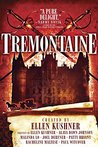
Tremontaine

Tremontaine (Tremontaine Season One)Tremontaine by Ellen Kushner
My rating: 3 of 5 stars

This is a cooperatively written, serialized prequel to the "fantasy-of-manners" Swordspoint (which in turn is followed by the heavily recommended The Privilege of the Sword). I haven't read the background but it feels like it was handed around between authors with a rough outline of where they wanted to end up, and everyone seemed to be on the same page when it comes to the spirit of the work. It's mostly solid storytelling and really has the feel of a 19th century serialization. Occasionally this doesn't work--a few chapters felt like they'd be heavily abridged in most editions, as characters seemed stuck in bland dialogue and parties while waiting for the story to pick up.

It is a pretty good story when it is going full steam. The Riverside setting is a late medieval or early renaissance world, fantasy in the sense of being ahistorical instead of magic heavy. The depiction three different cultures--the local nobles, the Riverside lower class, and a group of foreign traders--is done skillfully and the interactions feel quite natural.

The main selling point Duchess Tremontaine, much young than her appearance in Swordspoint. She's a vain, evil, manipulative and a genius, much in the mold of Francis Underwood in House of Cards. She has a few rivals with the wit to stay in the game, most notable the Balam "trader" Kaab, a young foreign merchant trained in the subterfuge-and-spying part of the family business. A young genius mathematician, kind and vulnerable and somewhere "on the spectrum" while she's working on Copernican solutions to astronomy, is a brilliant addition to the cast too.

Saturday, July 15, 2017

It's not our fault if you can't earn a living off the land rich men own

The rise of serfdom in Hungary was connected to the desire of rich people to be rich, which meant own landing and having serfs:
Stephen ordered that 'those who do not want to live under the authority of the monastery . . . shall be driven out of that place against their wish and their will.' Count Peter handed over one of his villages to the Abbey of Szazd with the condition that 'everyone who lays claim to status of freedom shall depart from there with the exception of the family (i.e., the serfs) of the church.' By the mid-11th century the kingdom was full of fugitive freemen, who posed a constant threat to public order.
Pal Engel, The Realm of St. Stephen p.78

Thursday, June 1, 2017

Not understanding the math behind the rule does not make it a good rule

Treating the output of an "algorithm" as inherently more objective or insightful than an expert opinion or even a gut feeling is really not defensible, though it is often treated as such.  Especially I've noticed when it confirms existing biases.

A decent if short interview plugging a paywalled article is here:

[T]ransparency is needed where technologies affect us in significant ways. Algorithms decide if individuals are legitimate candidates for mortgages, loans, or insurance; they also determine interest rates and premiums.

[. . . ]

But algorithms trained with biased data pick up and replicate these biases, and develop new ones.

[ . . . ]

If you’re hiring someone for a management position and you feed your algorithm data from the last 30 years, the data will be skewed, and the projected ideal candidate will be someone male, white, and in his 40s or 50s. I am a woman in my early 30s, so I would be filtered out immediately, even if I’m suitable for that position. And it gets even worse, because sometimes algorithms are used to display job ads, so I wouldn’t even see the position is available.

Quick additional note: Feeding in data without explicit race and gender markers does not solve the problem, since if these are powerful factors they will be inferred from other traits in the data set. 

Thursday, January 26, 2017

More links to toss in the fire

Trump's draft terrorism related ban avoids banning immigration from countries he does business with.  So Saudi Arabia, home to the 9/11 attackers, is not on the list.

"The Thing" was a passive Russian listening device embedded in a gift sent to the US ambassador.  Since it used no power it was hard to detect--basically a proto-RFD in 1945.  It apparently lasted five years, but the real evidence of Russian perfidy is that the bug violated a US patent.

L. M. Bujold interview.  Best response was about reactions to her writing--I figured she'd go with being glad she made someone happy (that's what the questions seemed to be leading to) but instead:
One that continues to baffle me is the indefatigable enthusiasm of some fans for explaining to others that Barrayaran neo-feudalism is a terrible system of government, as if their fellow readers couldn’t figure that out for themselves. [ . . . ]  From the passion these readers bring to the table, one would gather they imagine insidious card-carrying Feudalists are dire threat to the lifeblood of our nation.

Wednesday, January 4, 2017

Instead of Dancing in the Fire

Things Cassandra Saw That She Didn't Tell the Trojans, Because at That Point Fuck Them Anyway

Did Bad Health Care Kill the Republic?  Compare and contrast with how Lois Bujold thinks about pregnancy and technology.  In sci-fi.   Space opera sci-fi.  Military space opera sci-fi.
The Star Wars Insect Theory.  Hadn't realized this was from Max Gladstone.

The Queen Does Not Rule.  So Star Wars insects wouldn't be ants.  Not bad, and by an actual researcher.  But interesting that there's criticism of comparing ants to centralized systems back when that was the rage followed by an (un-self-aware?) insistence that they're more like trendy modern networks.

Wednesday, December 14, 2016

"Upward mobility" and economic growth

I've realized in the last few years that a lot of my professional success is due to working at a growing company for so long.  People needed to move into new roles, learn new things, take on more responsibility, and some of that naturally went to internal people who were in the ballpark in skill and experience.  Sure, some of that happens everywhere but the rates would be very different.  So while in one sense I can look back and think "work hard and get rewarded" it just wouldn't have happened in a contracting company like much of the pharmaceutical world.

This also applies nationwide--people who came of age in the '50s would have experienced, in aggregate, a lot of salary increases over the course of their career and looking at themselves and their cohort have learned that hard work is rewarded and if you're patient you should get ahead.  The lower growth rates of the last few decades will leave people with a different view of how things work, even if all else were equal.

Long intro but I kind of assumed that this phenomenon--lower growth--is a big part of people not doing better than their parents.  Not moving up in relative terms (ie, staying in the same quintile) is primarily a policy issue but as it turns out so is not earning more than your parents.


From Vox.

In retrospect I should have been able to figure this out without seeing a graph, given what I believe about the impact of policy on equality over the last 60 years.

Monday, November 14, 2016

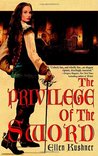
Privilege of the Sword

At some point I'll go back and just post links to my missing reviews I suppose, but this was one of the more charming books I've read and a good fit for my middlebrow views on how literature should address important topics.


The Privilege of the Sword (Riverside, #2)The Privilege of the Sword by Ellen Kushner
My rating: 4 of 5 stars

Lucius Perry was masked so it's a good thing I recognized his smooth dark hair, that and his sleeve, which was of an unusual cut in that glorious peacock blue. When you've mended as many clothes as I have, you sort of memorize fabrics without meaning to.

This book started seeming a little forced to me but grew into such a pleasure soon I was convinced the initial problems were all on me. This is definitely true of the ending, which initially felt unsatisfying but after sleeping on it seemed to be exactly what it should have been.

The setup has Katherine, a young woman, invited by a rich relative to come to the city. Against all conventions of civilized behavior he then dresses her in men's clothes and starts training her in swordplay. You could have ended up with an straightforward young-adult style adventure story which just plopped a girl in the hero's slot. But for a story that is rather explicitly about gender it's a testament to Kushner's craft how the points fill the background too. The mad uncle's idea is that a woman, given a sword and trained in dueling, can now decide for herself what "honor" is. This metaphorical give-a-woman-her-own-voice approach is mirrored in a book with long segments from women's point of view, neither of whom are Arya Stark like tomboys. Hence the quote--when Katherine thinks of needle, she is in fact thinking of a sewing needle and her domestic skills, and those have an unembarrassed place in this swashbuckling yarn.

I picked this up on an Audible sale with a 2-for-1 offer without knowing anything about it, except the "Neil Gaiman presents" bit on the recording. I've never been so satisfied with such a blatant marketing ploy.

View all my reviews