Pages

Thursday, August 21, 2014

Mutants

Mutants: On Genetic Variety and the Human BodyMutants: On Genetic Variety and the Human Body by Armand Marie Leroi
My rating: 4 of 5 stars

Near the end of this book the author pulls out the quote per molto variare la natur e bella--Nature's beauty is its variety--and it could be a motto for the book itself. Given that most of the book is about the human body developing dramatically abnormalities, usually during development, beauty is an odd word. I found some accounts difficult to read. But the ability for human biology to survive and sometimes prosper in so many different forms was just amazinga.

The book is a discussion of various conditions that have very visible effects--dwarfism, giantism, Siamese twins, people with no hands or feet, people with hands and feet but no arms and legs, people covered with more hair than Chewbacca, and so on. Some are fatal at birth, some at a young age, but most are not. A surprising (to me) number of people founded lines still prospering today--so a Chinese sailor missing the top his skull and clavicles founded a line that has several hundred descendants with the same symptoms.

If the existence of a whole family sharing such an unusual trait makes you wonder if scientists can do some sort of genetic analysis and figure something out about how genes interact with the body, well, answering that is the book's main concern. (Spoiler alert: Yes.) Most of the discussion is on gene expression and signalling pathways, in more detail than I expected. I'd call it roughly a Scientific American level of discussion. I'm not well qualified to judge the scientific soundness but in the small number of cases I knew anything at all Leroi seems to have done a good job presenting both conclusions and uncertainty.

The title--presumably picked by the publisher--is misleading though, as many problems are teratogenic or even nutritional and hove nothing to do with genetics. (Thalidomide and iodine deficiency induced issues, for example.) I don't begrudge "Mutant" for eye catching value but throwing in "genetic" in the subhead continues the annoying trend in popular science writing of implying everything biological is genetic.

Tuesday, August 5, 2014

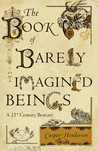
The Book of Barely Imagined Beings: A 21st Century BestiaryThe Book of Barely Imagined Beings: A 21st Century Bestiary by Caspar Henderson
My rating: 4 of 5 stars

This was not the book I expected when I ordered it, but I completely loved it.

I thought I was getting a coffee table book about biology with lots of pictures, instead turns out it's mostly words. (The hardcover is beautifully laid out, though.) The book is twenty-six essays titled around different, often weird, animals. Only some are primarily about their nominal subject. Some are riffs on biological features specific to the animals, others move into more general ruminations about folklore or philosophy or environmental hazards.

To take a couple examples, the opening essay is on the axolotl and spends around half the essay on medieval tales about salamanders dancing in fire and other interpretations of those amphibians--before describing a bit about evolution of the first land animals and how the tiny guys were doing cute little push ups back in the day, before getting around to saying something about the creature itself. Or, for humans, the distinctive feature he picks out is our feet--we're a two legged creature that walks instead of hopping and a lot follows from our bodies need to accommodate that. Chapters on octopuses, Gonodactylus smithii, dolphins and pterosaurs, on the other hand, are more straightforward zoology. (A few bits don't work that well, hence the book narrowly avoiding a 5-star rating.)

Since I have a visceral dislike for the sort of essay that starts with quantum entanglement and ends with the 'interconnectedness of the universe' or something, it took me a while to figure why the barely-science essays didn't bother me. (Beyond the fact that they often quite interesting on their own.) I think it's because Henderson clearly was fascinated by and respected the science; he knew the difference between when he was saying "This is what we've learned from science" and "This bit of science puts me in mind of this story I heard" and doesn't confuse the two.

In closing, here's a picture of a Yeti crab: .

View all my reviews

How could you not love someone with a smile like this?

I'm like six book reviews behind, but it's easier to post a picture of a paddlefish:

paddlefish

And this isn't one of your foreign exotic beauties, either--lives in the heartland of the USA.

But near extinction, dammit.

via PZ Myers.

Wednesday, July 16, 2014

The Difference Between “Significant” and “Not Significant” is not Itself Statistically Significant

http://www.stat.columbia.edu/~gelman/research/published/signif4.pdf

A paper that I read years ago (via a Cosma Shalizi post on the file drawer problem) and then totally failed to find when I wanted to re-read it.  Up there with the "No Free Lunch Theorem" as being simultaneously blindingly obvious and something that I'd never thought about.

It discusses exactly what the title says.  A highly significant result may be indistinguishable from an insignifcant one, statistically speaking.
Comparisons of the sort, “X is statistically significant but Y is not,” can be misleading.

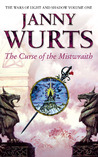
Curse of the Mistwraith

The Curse of the Mistwraith (Wars of Light & Shadow, #1; Arc 1, #1)The Curse of the Mistwraith by Janny Wurts
My rating: 3 of 5 stars

There are some nice moments in this book, the first of lord-knows-how-many in a series, and maybe I'd even recommend it if it told a complete story. And was maybe half as long. But in too many ways it just comes off as a standard fantasy setup with prophecies and wizards and destinies. Maybe the later books will deliver a great payoff but I'm unlikely ever to find out.

View all my reviews

Tuesday, July 15, 2014

The Attempted Murder of Thurgood Marshall

In late 1946, Thurgood Marshall was an attorney for the NAACP Legal Defense Fund and finishing the last of an amazing series of trials in Tennessee.  Following race riots in Columbia, in a pre-civil rights court room and with all white juries, Marshall would still win acquittals for 22 black men charged in the aftermath.

The last trial ended in November, with the spectator area atypically empty.  After another acquittal, Marshal and his associates left quickly and quietly, only to be stopped by the police on the way out of town.  Marshall's associates--Looby, Raymond and a white attorney named Weaver--were told to leave town but Marshall was arrested for drunk driving.

The police turned down a dirt road.  "Marshall knew that nothing good ever happened when police cars drove black men down unpaved roads."  But Looby had followed the police instead of leaving town and managed to intercept the police sedan near Duck River; he stopped the car and refused to move.  Frustrated, the police turned around and tried to book Marshall on drunk driving charges.  A judge name Jim Pogue took a look at Marshall, decided it was BS, the smelled his breath and let him go.  Pogue "stated that those offiers had come to the wrong man if they watned to frame Marshall. He said he was the one magistrate in Columbia who had refused to sign warrants for the arrests of Negroes during the February trouble."

By this point Marshall had realized why the courtroom was empty earlier in the day; the usual spectators were unwilling to take another defeat and had instead gathered at Duck River ahead of time for the planned lynching.  This time Marshall and the other attorneys left town secretly, sending another driver in Looby's car as a decoy.  Marshall made it out by the decoy car was in fact stopped and the driver beaten.

Source for this account: Devil in the Grove by Gilbert King.
Alternate version, not contradicting anything above but omitting the dirt road detour and the beating of the decoy driver, is here: http://tennesseeencyclopedia.net/entry.php?rec=296

Monday, June 9, 2014

Saturn's Children

Saturn's ChildrenSaturn's Children by Charles Stross

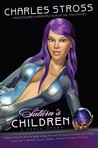
I bounced this up on my to read list because I was in the mood for space opera and someone mentioned it as a modern homage to Heinlein. Which is pretty spot-on, although we're not talking Starship Troopers, Farnham's Freehold or his young adult stuff. This is later-years Heinlein with plenty of sex in plenty of ways. (That picture to the left Goodreads provided gratis gives you a realistic idea of what era they're paying homage to.)  It's a picaresque novel in space, decently plotted even if there were so many betrayals, body swaps and identical model robots that by the end I'd lost the thread on a few of the factions.

By far the most interest part is the setting, which is what I was most skeptical of going in. Stross imagines a world were humans have succumbed to something or other, leaving sentient robots behind. And while a few are quiet alien, they were generally built to think "like humans" and/or have internalized their original design goals that they keep on functioning in some facsimile of human society. But they weren't built just to be intelligent--they were also built to be servants, and the book tackles the implications of that in various ways.